
2025 Annual Statistics .de

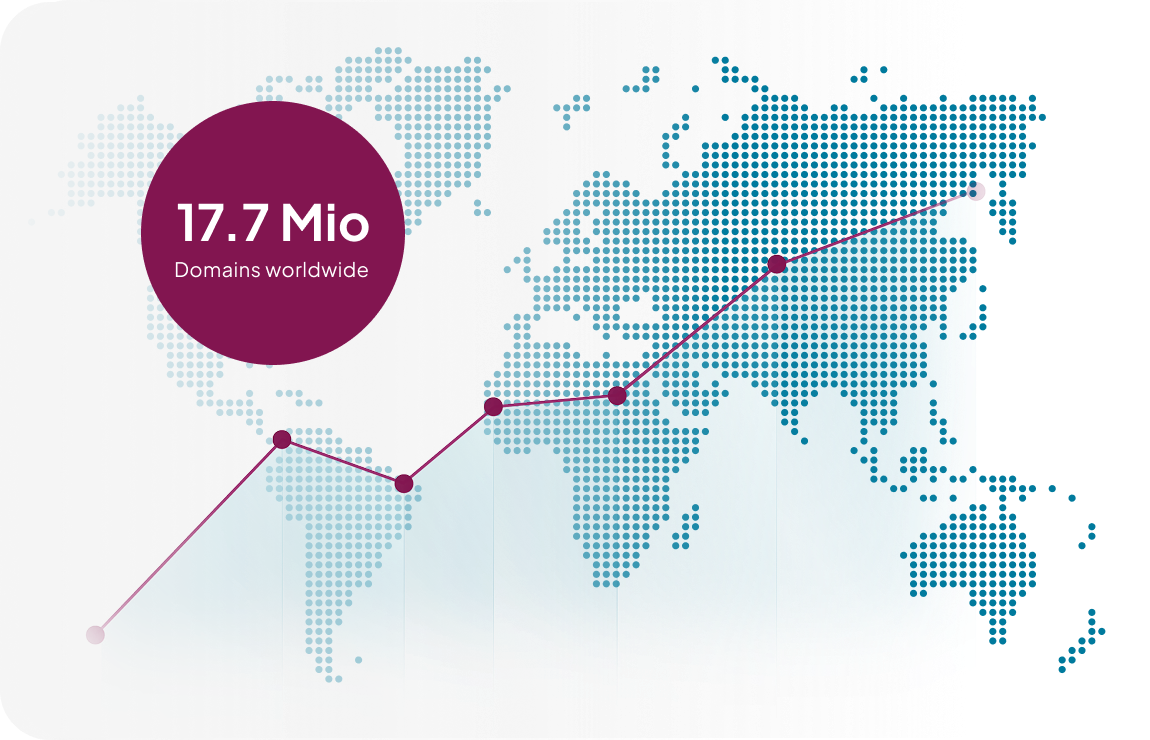
.de transcends borders – from a country code to a global quality domain
Growth drivers are coming from abroad: by the end of 2025, almost 2.15 million .de domains will be registered by parties outside Germany. The total number of domains held by non-domestic domain holders rose by 3.3 per cent.

Explore our interactive Maps and Tables

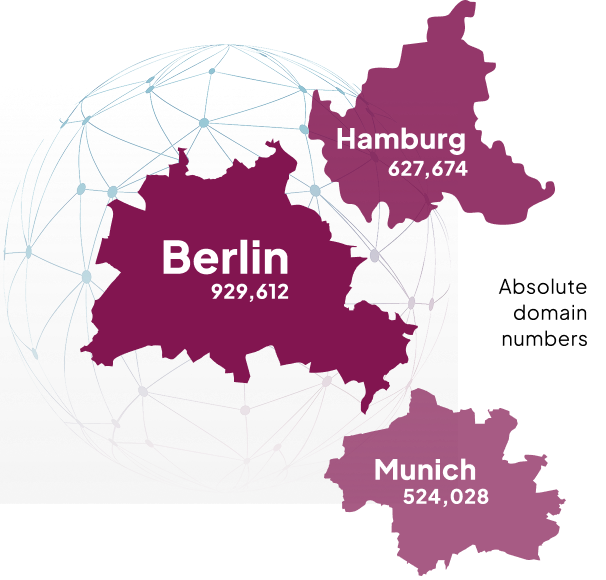
Federal states: Hesse makes it into the top 3
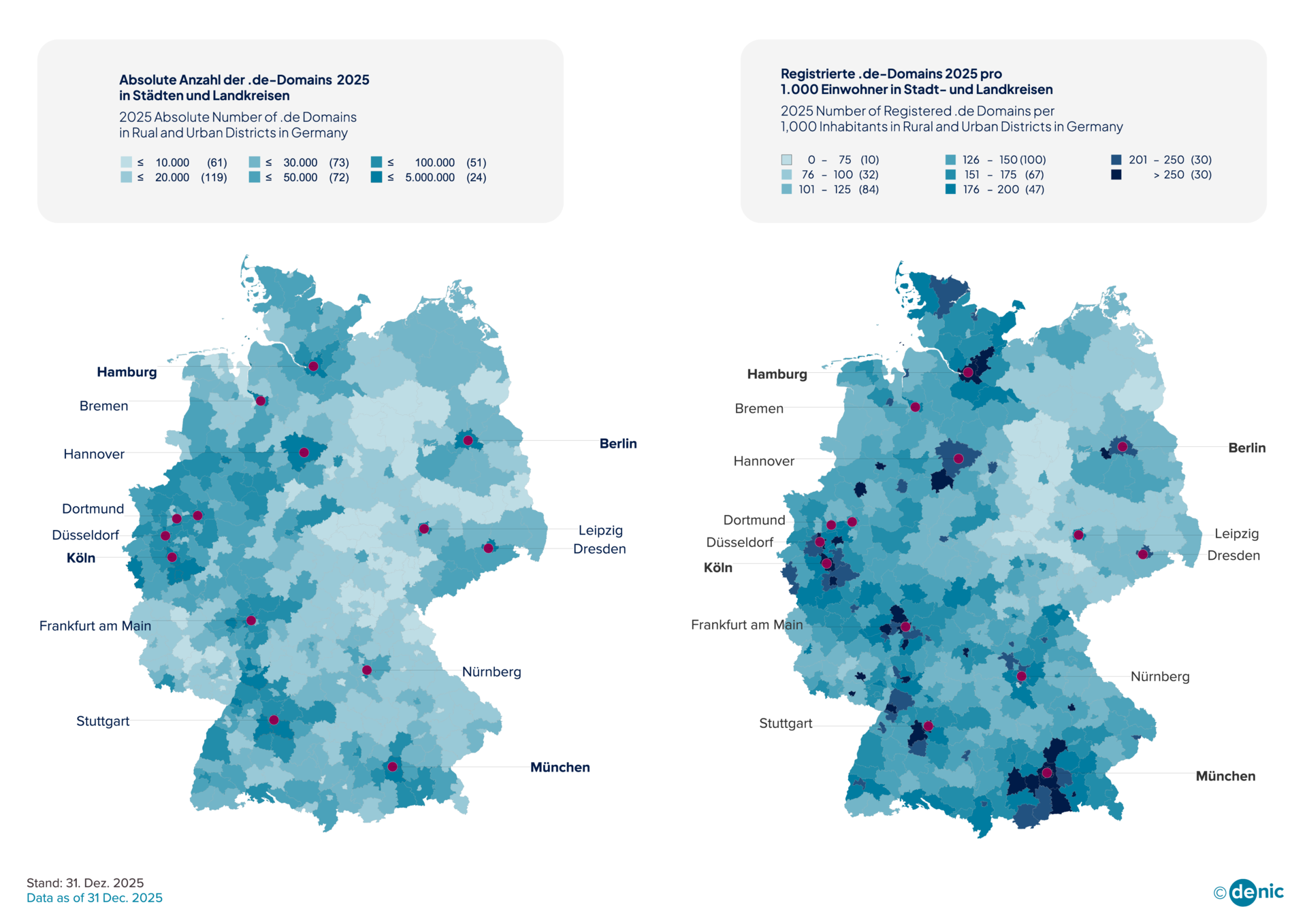
In 2025, continuity also characterises the rankings of the federal states in terms of domain distribution per capita. With 329 domains per 1,000 inhabitants, Hamburg remains well ahead of Berlin (246). They are followed by Hesse (203) and Bavaria (201). Mecklenburg-Western Pomerania and Thuringia continue to occupy the bottom positions, with 109 domains each, and Saxony-Anhalt with 88 domains per 1,000 inhabitants.
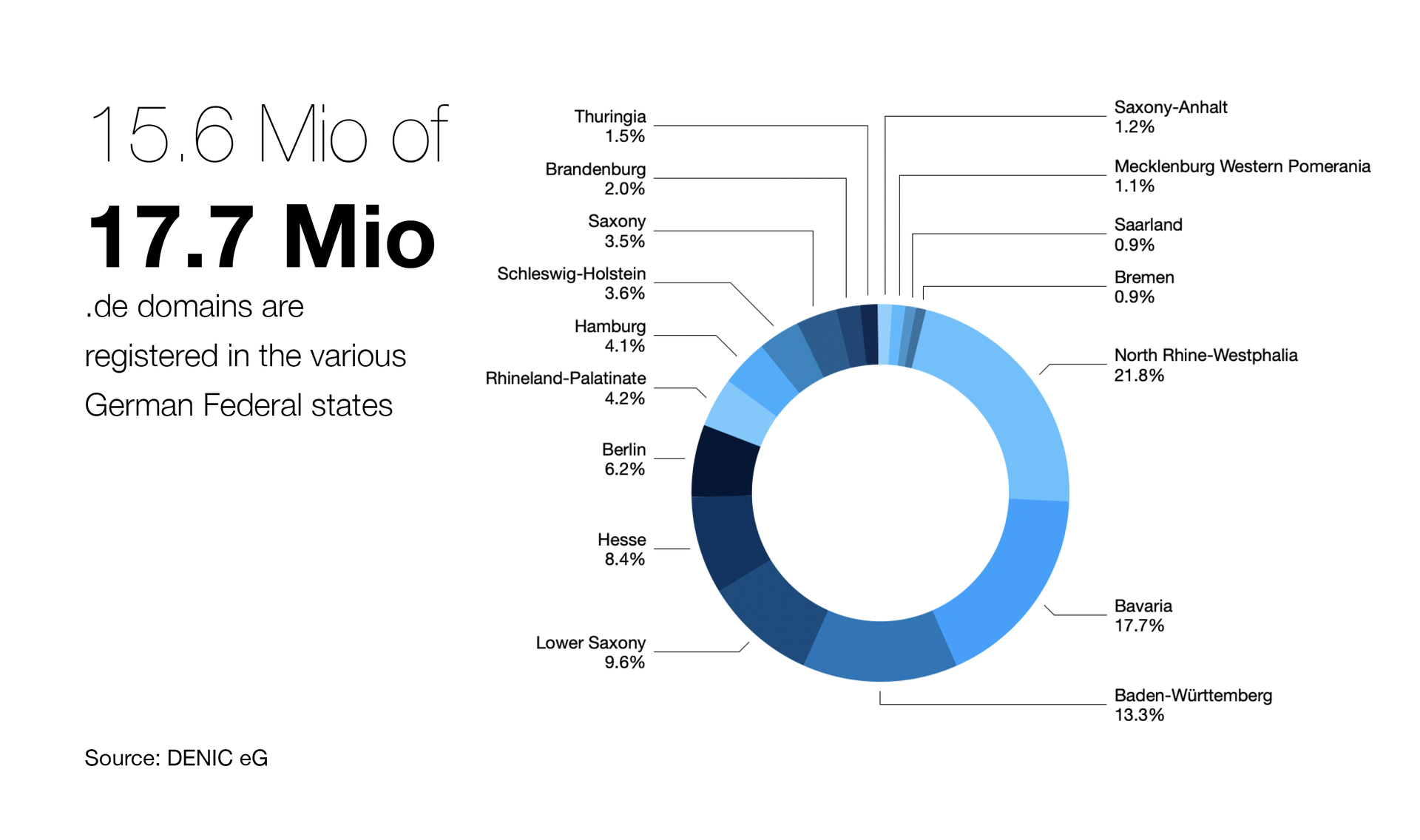
Lower Saxony saw the strongest growth at +1.82%, followed by Brandenburg (+1.09%) and Saxony-Anhalt (+1.05%). This means that two eastern federal states are growing faster than the traditional digital hubs.
Overall, ten federal states are showing growth. The average percentage change in 2025 in the eastern federal states (-0.084%) is lower than that of the western federal states (+0.082%). In 2025, Lower Saxony is the federal state with the highest absolute growth (27,731), followed by Baden-Württemberg (15,381) and Rhineland-Palatinate (5,487).
Growth abroad: Internationalisation is growing significantly
12.2.per cent of .de domains are registered from outside Germany.
Year on year between 2024 and 2025, the total number of domains held by non-domestic domain holders rose by 3.3 per cent, corresponding to an increase of 69,400 .de domains.
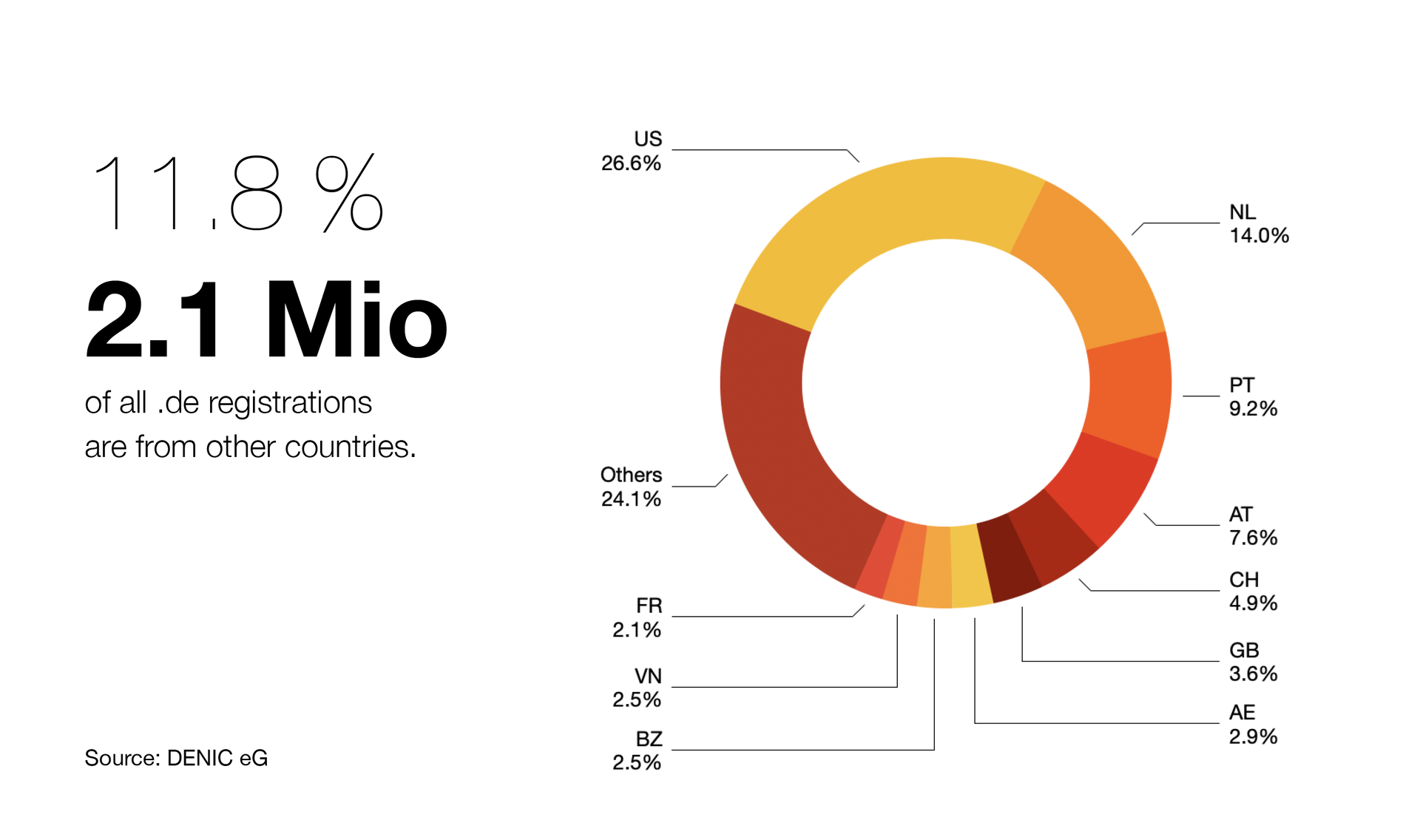
The main driver of overall growth was foreign owners, who accounted for 12.2 per cent of domains at the end of the year.
Foreign owners of .de domains come from all over the world. German domains continue to be in highest demand in the USA (31.3 per cent) and the Netherlands (12 per cent). These are followed by Portugal (10.6%), Austria (7.7%) and Switzerland (4.8%).
.de is a strong brand internationally, particularly within the EU